On a Naremburn block with changing levels, the lowest drain may show a problem first. Describe the overflow relative to the house and street rather than assuming it marks the blockage.
A slow drain is the symptom. Explore the pipe below to see some possible causes.
Hover to explore. Click or tap to keep an explanation open.
Roots Find a Way into the Pipe.
Fine roots can enter an open joint or crack and grow into a dense obstruction. Clearing the roots may restore flow, while the entry point can still need repair.
What you might notice
A drain that clears, then blocks again.
How we investigate
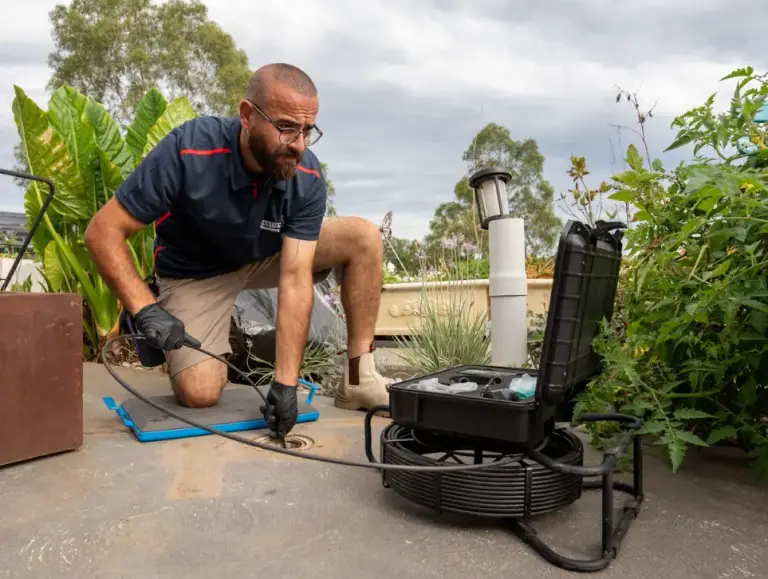
CCTV inspection can show roots and the condition of the joint.
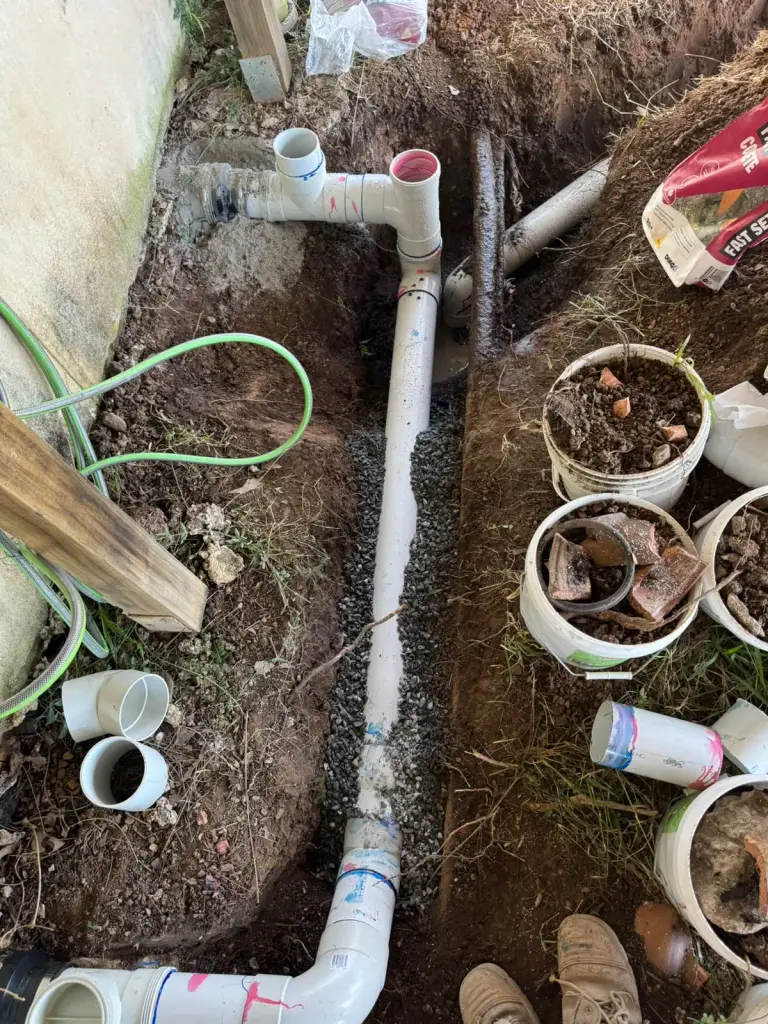
Replacement pipework shown; an example of repair work.
A Small Step Can Catch Passing Waste.
Movement can leave adjoining pipe sections out of alignment. The edge may catch waste or allow roots to enter through the gap.
What you might notice
Repeated restrictions at the same point.
How we investigate
A camera and locator help establish where a damaged section sits.
Illustration of a low pipe section.
A Dip Can Hold Water and Debris.
Where a pipe has settled, water may remain in a low section. Material can collect there and gradually reduce the space available for flow.
What you might notice
Slow drainage that returns after clearing.
How we investigate
Inspection helps distinguish deposits from a fall or structural problem.
Camera inspection helps investigate the connected line.
The Symptom Can Appear Upstream.
A restriction further along the connected line can make water rise at a lower fixture or outdoor opening. The place that overflows is not always the blockage location.
What you might notice
Several fixtures gurgle or back up together.
How we investigate
The plumber compares affected fixtures and checks accessible branches.
These are possible causes, not a diagnosis of your property. Tell us where water appears and which fixtures are affected.
Plan Access before the Visit
Mention steep steps, rear access, retaining walls and visible inspection openings. Explain access arrangements if the route passes another property.
Naremburn Park is a local orientation reference. Give the full street address and actual entrance when booking; a landmark does not identify your drainage or access.
Current coverage is confirmed by full street address. Call with the symptoms and urgency to confirm the next available response.
Diagnosis before a Clearing Method
The plumber traces the connected line, finds safe access and clears suitable obstructions. CCTV and surface locating can help explain repeated low-point backups before selecting a repair position.
Restoring flow and repairing a defect are separate tasks. Where damaged joints, poor fall or a failed section are found, the evidence and proposed repair scope are explained before agreement.
Safe First Actions
Stop using fixtures connected to a backing-up line.
Keep people and pets away from wastewater.
Avoid chemical cleaners and tell the plumber about products already used.
Stay clear of water near electrical equipment, unstable ground and heavy pit covers.
Urgent calls are taken 24 hours, 7 days a week. Do not enter a pit or confined space to investigate.
Planning considerations include sloping streets, mature vegetation and older drainage routes. Your property's actual layout matters more than its postcode. Tell us which openings are accessible and whether another household or business shares the affected line.
Identify the route from the entrance to the affected drain. Mention steps, locked gates and anything that limits working space. Keep existing drain plans or previous camera findings available if you have them.
Before a Repair Is Agreed
Ask where the suspected fault is, what supports that finding and whether any section could not be inspected. Discuss access, the repair extent and reinstatement together.
Before Normal Use Resumes
Ask what the flow check showed and whether a defect remains. Keep any follow-up recommendations with your property records, especially when a shared drain is involved.
Questions That Help Explain the Diagnosis
These are starting points for the assessment, not a diagnosis of every property in Naremburn.
The Overflow Is a Clue, Not the Fault Location
Where does wastewater first appear when connected fixtures are used?
Clearing may restore flow, but repeated blockage at the same section warrants closer investigation. Roots or a damaged joint can require a separate repair after the immediate overflow is controlled.
Can the camera reach the section, and is there enough visibility to interpret it?
A visible defect becomes more useful for repair planning when its location can be related to the surface. Access, approximate depth and nearby structures then help define the next step.
It may be the first escape point for a downstream restriction. That does not prove the floor waste itself caused the problem.
Can ground movement affect drainage?
It can change joints or support, but inspection is needed to establish whether your pipe is affected. Recurrence at one point is useful history.
Should I describe rainfall as well as fixture use?
Yes. Note the timing without deliberately adding water to test an overflowing system. This helps separate sewer and stormwater investigations.
How can a fault be located on a slope?
A camera and electronic locator may relate an internal finding to a surface position. Access and signal conditions limit what can be established.
What should I prepare for a Naremburn drain call?
Mention steep steps, rear access, retaining walls and visible inspection openings. Explain access arrangements if the route passes another property. Share the full Naremburn address, symptoms and urgency so current coverage and the next available response can be confirmed.
What if wastewater overflows at my Naremburn property?
Stop using connected fixtures and keep people and pets away. Avoid chemicals and do not lift heavy drain covers. Urgent calls are taken 24 hours, 7 days a week. Explain the affected area and safe-access restrictions.
Nearby Locality Guides
Different streets and building types can need different access arrangements.